

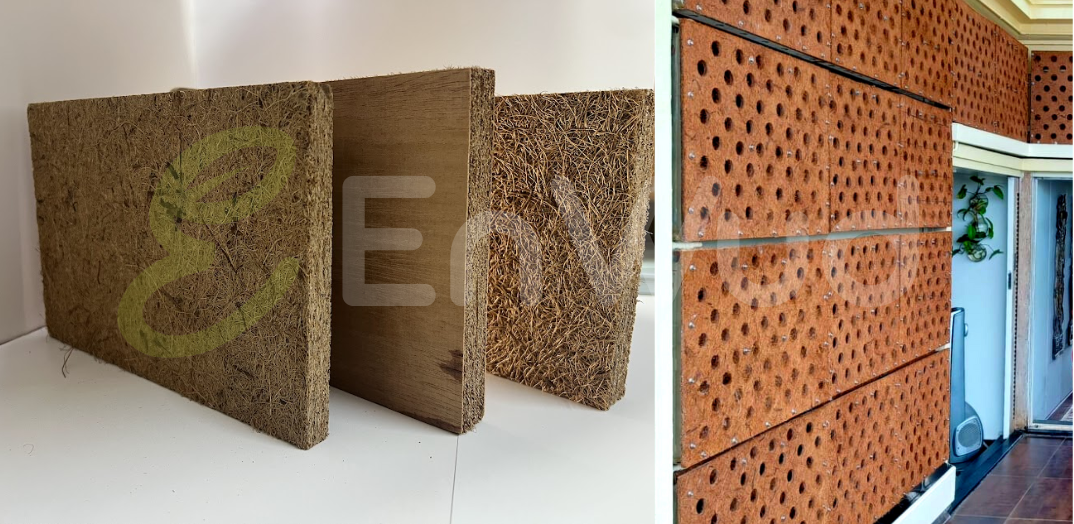
Over-exploitation of resources, increased deforestation, and increasing carbon footprint have forced us to reflect upon the deadly consequences that our desire for advancements and luxuries is putting us face-to-face with in the coming years. It is high time that we realize the drastic damage caused by human beings to the environment and repay it as early as possible. Due to the increasing deforestation, global warming, increased carbon footprint, and over-exploitation of resources, the time has come to realize the damage caused by living beings to the environment and to repay it as early as possible. Use of coir as a replacement for timber is one of the most unique and self-obligatory tools to move towards the thought of a sustainable future.

- It can be claimed by full conviction today that the crux of the future generation is based on the usage of sustainable and elegant solutions relying on co-existence and equality with nature. One of the primary areas that causes major loss of green cover by large-scale cutting of trees is the wood industry. Usage of plywood for a number of household and commercial applications has increased consistently in the past number of years. Plywood-based furniture is very common and possesses several merits and demerits.
- Plywood has many advantages, including being lightweight, adaptable for different uses, and resistant to moisture and pests. Plywood is an excellent material for furniture making, cabinetry, and construction due to these qualities, which provide both functionality and aesthetic appeal. Even if there are many merits of plywood, the most imperative demerit is that it requires the cutting of trees. Deforestation is a major problem that is responsible for global warming and increased climate change imbalances.
The following are some of the most common demerits of the application of plywood.
- Water Damage: Plywood can be damaged by water and should not be exposed to moisture for long periods.
- Health Disorders and Demerits: Adhesives used in plywood, like urea, phenol formaldehyde, and many others, emit toxic substances.
- Challenging to Sand and Paint: Due to their rough texture, plywood-based products, artifacts, furniture, etc., present challenges when it comes to sanding and painting. Sand work chips and splinters, and layers of painting look uneven and not flat. It is technically feasible, but difficult to sand and paint plywood.
- Uneven surface: Plywood is generally not suited for surface work as it gives a rough texture and appearance. Nonetheless, there are various methods that can be employed to enhance the look of plywood.
- Vulnerability to Moisture: The Majority of plywood is vulnerable to moisture
Plywood can take in moisture over time, at least most varieties do, and while it won’t bend or warp, it will become weaker. The glue can begin to lose its hold, and especially at the edges, the plywood can end up. Use of coir as a replacement of timber/wood, i.e., a plywood substitute, is one of the most unique as well as self-obligatory tools to move towards the thought of a sustainable future and sustainable future material. Coconut-based coir boards are one of the eco-friendly building materials and green interior materials.
Coir Board Chairman CP Radhakrishnan, in one of his latest discussions, has rightly summarized how coir wood is bound to become the face of the future wood industry and that it has immense potential to take over as an eco-friendly substitute for the wood industry. It is one of the popular interior design trends of 2025. Coir-wood is rightly said to be one of the most self-sufficient materials of the near future. The use of coir-wood as a replacement for timber-wood will not only help prevent the cutting of trees, but it will also promote and encourage further plantation of trees. It is a renewable and recyclable wood alternative and a sustainable MDF alternative capable of becoming eco-friendly home decor materials.
As per a statement issued recently by the Coir Board, it aims to increase its exports threefold by the year 2025. With such a vision and dedicated approach, the coir wood industry can make enthralling progress in the coming years. This will be a major payback for humans towards nature. Coir wood possesses excellent properties of being biodegradable and sufficiently flexible to allow itself to be used for a large spectrum of uses, ranging from false ceiling lights columns, partitions and panelling work, holders, side supports for sofa, chairs, different types of easy-to-install furniture’s for disaster relief works and many other applications. As per a recent notification, railways will be using coir wood for the manufacturing of the seats and berths. This is a major transition in the booming coir industry.
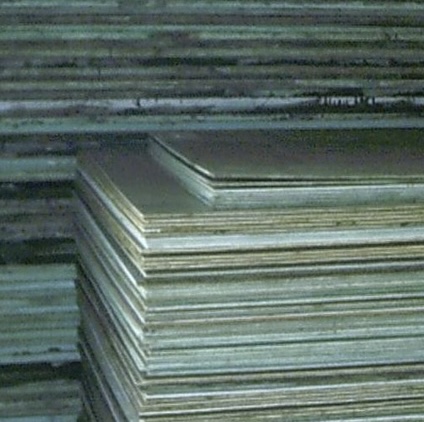
Coconut is a versatile material, an eco-friendly plywood alternative that grows abundantly in tropical climatic conditions. There are many advantages of coconut, primarily in the edible food industry. But the leftover husk, a by-product, is not of any use there. Coir-Wood and coir-based boards are produced by binding the needle-felt coir fibres of coconut using any standard synthetic resin. This has good potential for different applications in wide areas of industries and recyclable furniture panels.
The following are five major reasons to choose coir-based products instead.
- Coir itself is biodegradable, and when it is made with biodegradable resin, coir-based boards become 100% biodegradable furniture boards.
- It gives a naturally attractive look; hence, it can be used directly without much additional treatment or look enhancement. If required, it can be painted or polished, or lamination can be applied to it.
- It is insect-proof and termite-proof, and moisture-resistant and moisture-proof on a large scale.
- The tensile strength is usually equal to/or more than that of plywood and gives strength properties both along and across the directions of the material.
- It is a non-toxic plywood alternative and a formaldehyde-free- free plywood.
Indeed, Coir wood is one of the most eco-conscious furniture and toxic-free furniture choices in India!!!!
Dr. Manali Date.